Few gynecology procedures are as routine as an endometrial biopsy, yet few trigger as many billing headaches. A wrong code, a missing modifier, or a thin diagnosis link can turn a clean claim into a denial. Choosing the right CPT code for endometrial biopsy is the first step toward protecting your revenue.
This guide covers what practices need to know: the codes, the modifiers, the medical necessity rules, and the documentation payers expect.
What Is the CPT Code for Endometrial Biopsy?
The primary endometrial biopsy CPT code is 58100. It describes endometrial sampling (biopsy) with or without endocervical sampling, without cervical dilation, using any method. That includes the common Pipelle technique and other suction or curette-based approaches performed in the office.
CPT 58100 carries a 000-day global period, so routine follow-up related to the procedure on the same day is bundled. It is also designated a “separate procedure,” meaning payers may not reimburse it when it is performed as an integral part of a more extensive procedure through the same incision or approach.
When a coder searches for the CPT code endometrial biopsy providers should use, 58100 is the answer for most office-based cases. Details such as the method used and what else happened during the visit decide whether another code is needed.
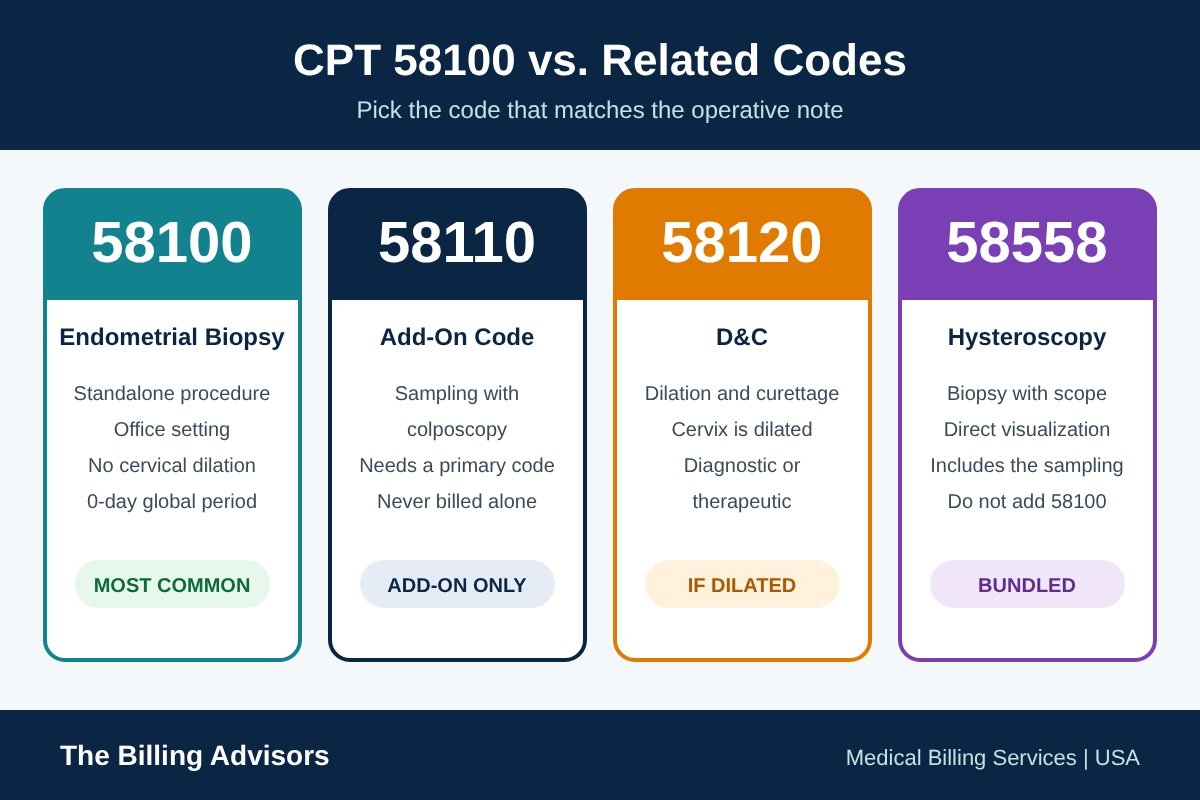
CPT 58100 vs. 58110 vs. 58120: Which Code Applies?
Three similar-looking codes cause most of the confusion:
- 58100: Standalone endometrial biopsy, no cervical dilation.
- 58110: An add-on code reported when endometrial sampling is performed along with a colposcopy procedure. It can never be billed alone.
- 58120: Dilation and curettage (D&C), diagnostic and/or therapeutic. It involves cervical dilation and is a more extensive procedure.
If the provider dilated the cervix and curetted the uterine lining, 58100 is not appropriate. If the biopsy was done during a hysteroscopy, you would look at the hysteroscopy family (for example, 58558) instead of reporting 58100 separately. Matching the code to the operative note, not to the visit’s original intent, keeps claims defensible.
When Is an Endometrial Biopsy Medically Necessary?
Payers deny claims when the diagnosis does not support the procedure. Strong ICD-10-CM pairings for an endometrial biopsy commonly include:
- N95.0: Postmenopausal bleeding
- N92.0, N92.1, N92.4: Excessive, frequent, or irregular menstruation, including premenopausal bleeding
- N93.8 / N93.9: Other or unspecified abnormal uterine and vaginal bleeding
- N85.00 and related codes: Endometrial hyperplasia
- R93.89 or abnormal imaging findings: Thickened endometrium on ultrasound
- Z79.810 or tamoxifen-related monitoring: When clinically documented
Always code to the highest level of specificity documented. “Abnormal bleeding” with no duration, pattern, or risk factors is a red flag for auditors. Note the patient’s age, symptoms, BMI, and any history of unopposed estrogen exposure or Lynch syndrome so the clinical picture supports necessity.
Modifiers That Matter for the Endometrial Biopsy CPT Code
Modifiers tell the payer the story behind the claim. For this procedure, the most relevant are:
- Modifier 25: Appended to the E/M service when the visit was significant and separately identifiable from the biopsy.
- Modifier 59 or X-modifiers (XS, XU): Used when NCCI edits bundle 58100 with another procedure but the services were distinct, such as a different session or separate indication.
- Modifier 51 and 52: Rarely used, but 52 may apply if the procedure was only partially completed, for example when an inadequate sample was obtained because of cervical stenosis. Check payer policy first.
Never add modifiers just to bypass an edit. Each one must be supported by the note.
Can You Bill an E/M Visit With CPT 58100?
Yes, but only when the E/M is truly separate. A problem-oriented visit in which the provider evaluates abnormal bleeding, reviews history, orders labs, and then decides to perform a biopsy may justify an E/M with modifier 25 (for example, 99213-25 or 99214-25).
A scheduled biopsy visit where the only work was the pre-procedure check, consent, and the biopsy itself typically does not support a separate E/M. The decision to perform a minor procedure is already included in the procedure’s payment. This is one of the most common endometrial biopsy billing errors flagged in audits.
Pathology and Related Codes to Know
The biopsy is only part of the claim picture. Related services often include:
- 88305: Surgical pathology, gross and microscopic exam. Billed by the pathology lab, or by the practice only if it runs an in-house lab.
- 81025: Urine pregnancy test, performed before the procedure when clinically indicated.
- 76830 / 76856: Transvaginal or pelvic ultrasound, if separately ordered and documented.
- 99070 or supply codes: Many payers consider the Pipelle device part of practice expense, so verify before billing.
Coordinate with your lab so the same specimen is not billed twice, which is a frequent cause of duplicate-claim denials.
Common Reasons Endometrial Biopsy Claims Get Denied
After reviewing countless gynecology claims, the same patterns appear again and again:
- Diagnosis mismatch. The ICD-10 code does not establish medical necessity.
- Bundling edits. 58100 submitted with another procedure without a valid modifier.
- Unsupported modifier 25. The note shows no separate E/M work.
- Wrong code selection. 58120 or 58100 chosen without matching the dilation documented.
- Missing or vague documentation. No consent, no technique, no sample description.
- Frequency limits. Repeat biopsies within a short window without new clinical justification.
- Timely filing and eligibility errors. Administrative mistakes that are entirely avoidable.
Documentation Checklist for a Clean Claim
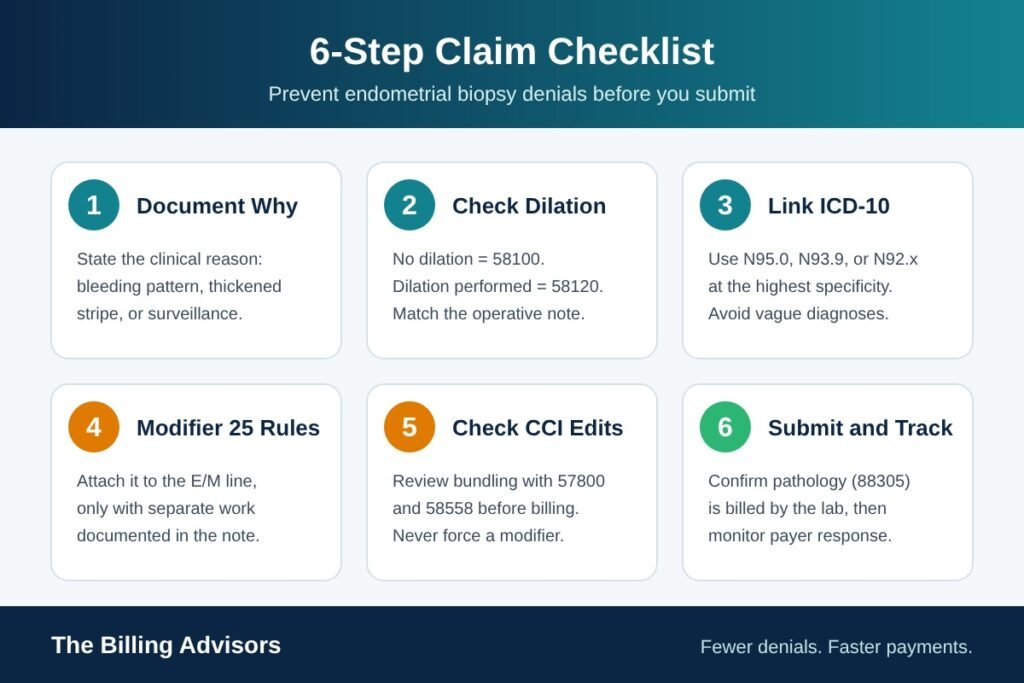
Strong notes are your best defense during a payer audit. Make sure every biopsy record includes:
- The reason for the procedure and relevant symptoms
- A pregnancy test result, if applicable
- Informed consent
- The technique used and whether the cervix was dilated
- Instruments, uterine sounding depth, and any local anesthetic
- Specimen description and destination lab
- Patient tolerance and any complications
- Post-procedure instructions and the follow-up plan
If the physician also performed a significant E/M, document that work in a clearly separate section.
Reimbursement Tips and Payer Considerations
Medicare, Medicaid, and commercial carriers do not all treat the CPT code for endometrial biopsy alike. Fee schedules vary by region and payer, and some require prior authorization or have specific policies on frequency and diagnosis. To stay ahead:
- Review each payer’s medical policy and the current NCCI edits quarterly.
- Update your charge master every January when CPT changes take effect.
- Track denial trends by code, payer, and reason so patterns surface quickly.
- Appeal promptly, with the operative note and clinical rationale attached.
Billing teams who stay current on these updates collect more on first submission and spend far less time on rework.
Frequently Asked Questions
What is the CPT code for an endometrial biopsy?
CPT 58100 is the standard code for an in-office endometrial biopsy without cervical dilation.
Can I bill 58100 and 58110 together?
Not typically. 58110 is an add-on code used only with a colposcopy procedure, while 58100 is a standalone code.
Does Medicare cover an endometrial biopsy?
Yes, when medical necessity is documented, such as postmenopausal bleeding or an abnormal imaging finding.
Is the pathology read included in 58100?
No. Pathology (such as 88305) is billed separately by the interpreting lab.
Let Experts Handle Your Gynecology Billing
Getting the endometrial biopsy CPT code right takes more than memorizing 58100. It takes accurate coding, strong documentation, and constant attention to payer rules. The Billing Advisors helps U.S. practices reduce denials, speed up payments, and stay compliant with end-to-end medical billing and coding support.